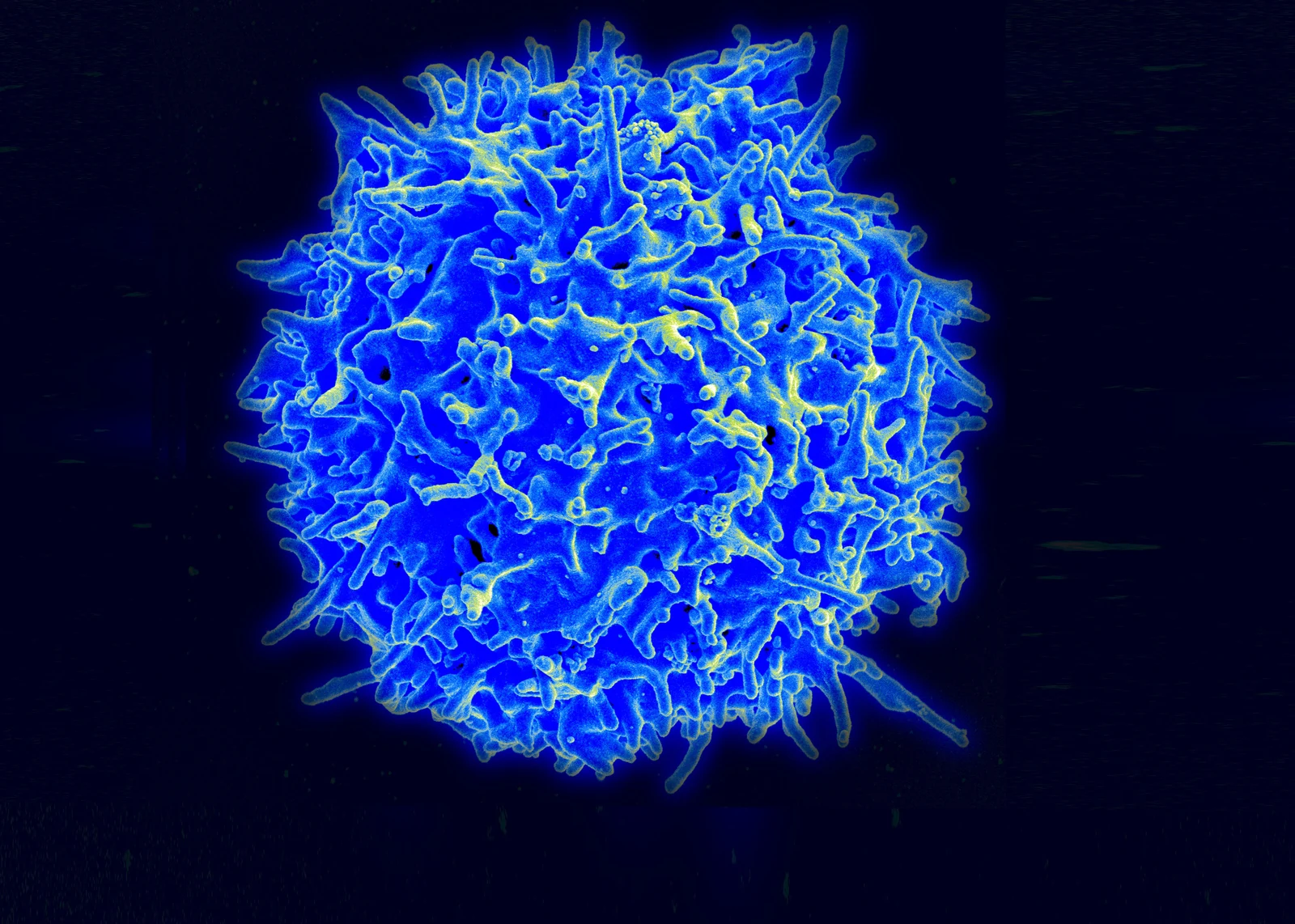
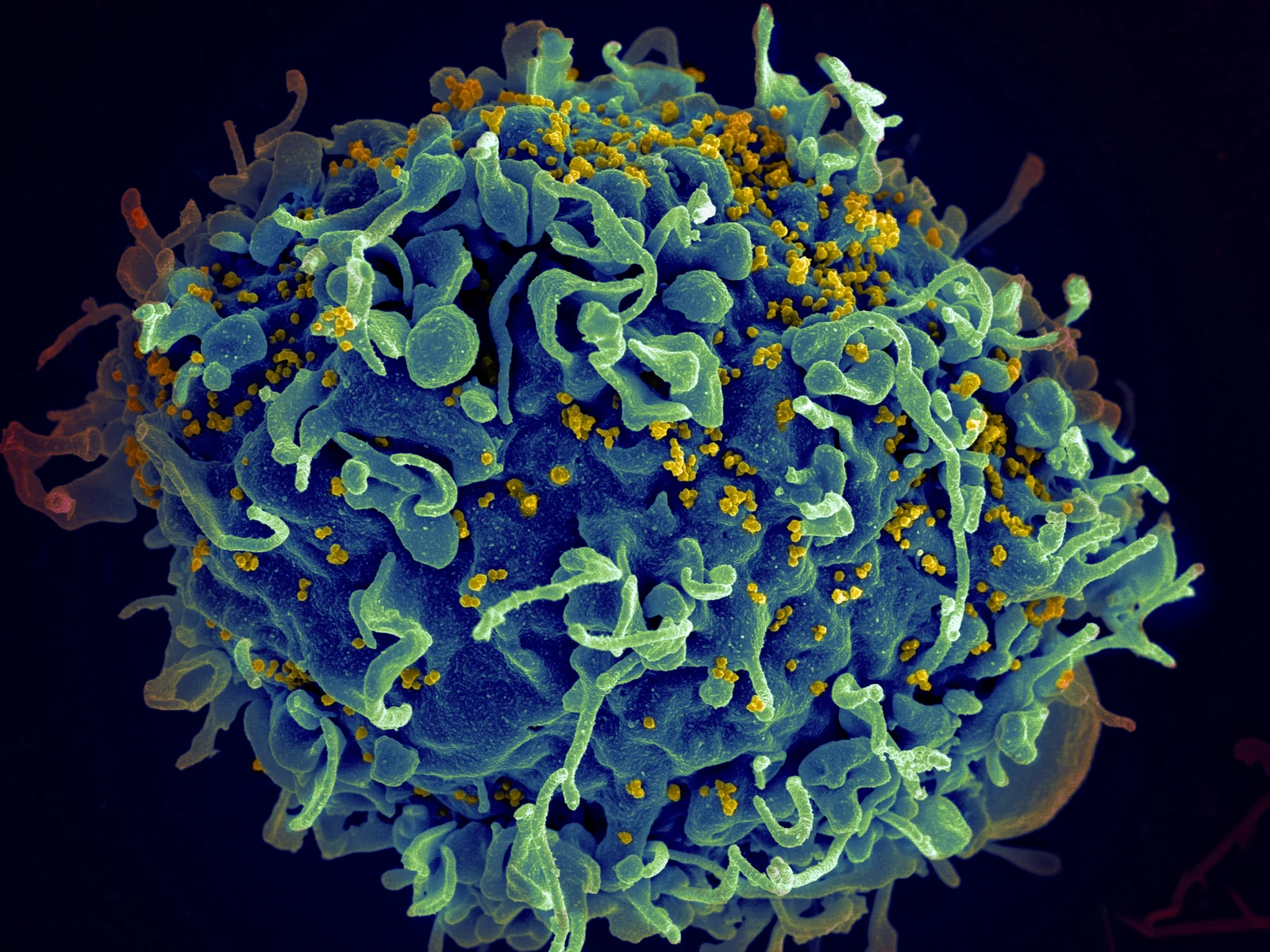
Explore what HIV means, its origins in primate SIV, the 1959 discovery, immune-system damage, viral mutations, treatment, and scientific evidence.
For educational purposes only. This article is not medical or clinical advice. See a physician or other qualified healthcare provider for medical care.
HIV is one of the most extensively studied viruses in modern medicine. Yet its story began long before scientists recognized AIDS in 1981.
Researchers have traced HIV's evolutionary origins to viruses infecting African primates, recovered evidence of human infection from a blood sample collected in 1959, and reconstructed how the virus spread through human populations decades before it was identified.2567
One particularly fascinating discovery is that some African primates can carry related viruses without developing AIDS-like disease, while infected chimpanzees may experience serious immune damage and premature death.34
Why does the same family of viruses behave so differently? How did a primate virus become a human virus? And why is HIV so difficult to eliminate?
To understand these questions, we begin with three letters: H-I-V.
What Does HIV Stand For?
HIV stands for Human Immunodeficiency Virus.1
- Human: The virus is adapted to infect humans, although closely related viruses infect other primates.
- Immunodeficiency: Untreated HIV can weaken the immune system, making it harder to fight certain infections and cancers.
- Virus: HIV is an infectious agent that depends on living cells to reproduce.19
Each part of the name tells us something about the biology of HIV.
H — Human: Can Animals Get HIV or a Similar Virus?
What is SIV?
Scientists have identified related viruses called simian immunodeficiency viruses (SIVs) in numerous African primate species, including chimpanzees, gorillas, sooty mangabeys, and African green monkeys.2
The term simian refers to monkeys and apes. Like HIV, SIV belongs to a group of retroviruses called lentiviruses.
SIV is not a single identical virus circulating in every primate. It includes many genetically distinct viral lineages associated with different host species.23
Scientists established the evolutionary relationship between HIV and SIV by comparing viral genetic sequences. These comparisons revealed that particular human HIV lineages are closely related to viruses found in specific African primates.2
Where Did HIV-1 and HIV-2 Come From?
There are two main types of human immunodeficiency virus.
HIV-1: Chimpanzees and gorillas
HIV-1 is responsible for the overwhelming majority of HIV infections worldwide.
Scientists classify HIV-1 into four major groups: M, N, O, and P.28
The pandemic group M traces to SIV infecting chimpanzees in Central Africa. Group N also has chimpanzee origins.28
Groups O and P are most closely linked to SIV infecting western lowland gorillas. Research indicates that gorilla SIV itself descended from a chimpanzee SIV lineage.8
This means the evolutionary history is more complex than a single virus moving directly from one chimpanzee into one human.
HIV-2: Sooty mangabeys
HIV-2 arose through separate cross-species transmission events involving SIV in sooty mangabeys, monkeys native to West Africa.2
HIV-1 and HIV-2 therefore did not arise from the same immediate animal source.
What does this tell us?
The emergence of HIV involved multiple independent animal-to-human transmission events, rather than one event explaining every HIV lineage.2
Does SIV Make Animals Sick? Can It Kill Them?
Yes, but its effects differ substantially between primate species.
Some primates carry SIV without developing AIDS-like disease
Sooty mangabeys and African green monkeys can carry SIV for long periods while generally avoiding the progressive immune failure associated with untreated HIV infection.3
Remarkably, these animals may have substantial viral replication without developing severe disease.
Researchers have found that natural SIV hosts often limit persistent immune activation and inflammation, even though the virus remains present.3
This is important because immune damage is not determined solely by how much virus is circulating. The host's immune response also plays a major role.
In chimpanzees, SIV can cause serious disease
A landmark study published in Nature in 2009 examined wild chimpanzees in Gombe National Park, Tanzania.
Researchers followed 94 chimpanzees over more than nine years. Of these, 17 were infected with SIVcpz and 77 were uninfected.4
The study found that infected chimpanzees had a 10- to 16-fold higher age-adjusted mortality hazard than uninfected chimpanzees in the observed communities.4
Researchers also documented:
- Significant depletion of CD4 T cells in examined infected animals.
- Damage to lymphatic tissues involved in immune function.
- Reduced reproductive success among infected females.
- Increased infant mortality among offspring of infected females.
- AIDS-like tissue changes in one infected chimpanzee.4
These findings challenged the earlier assumption that SIV was generally harmless in its natural primate hosts.
Why is this discovery so important?
It demonstrates that viruses closely related to HIV can cause severe immune-system damage in some species while being comparatively well tolerated in others.
Scientists study these differences to understand the relationship between viral replication, chronic inflammation, and immune-system failure.34
Which Came First: SIV or HIV?
The evolutionary ancestors of HIV circulated in primates before HIV became established in humans.2
SIV lineages have a much deeper evolutionary history than the recognized human HIV epidemic.
However, scientists cannot assign one precise date to the beginning of all SIV infections. SIV represents multiple related viral lineages that have evolved and crossed between primate species over long periods.2
An additional finding makes this history especially interesting: chimpanzee SIV itself has a recombinant ancestry involving viruses associated with different monkey species.28
In other words, viral recombination was part of the evolutionary story even before the emergence of HIV in humans.
We will explain recombination in the Virus section below.
Where Did HIV Originate? The Evidence and the Historical Hypotheses
It is important to distinguish three different scientific questions:
1. What viruses were HIV's evolutionary ancestors?
Genetic evidence strongly establishes relationships between human HIV lineages and SIV in African primates.28
2. How did those viruses first enter humans?
The exact exposure events were not observed. Researchers have proposed biologically plausible mechanisms.2
3. How did an initially limited human infection become a widespread epidemic?
Researchers have investigated historical medical practices, urbanization, transportation, migration, and other conditions that may have influenced subsequent transmission.27
These are related questions, but they are not interchangeable.
Hypothesis 1: Hunting and exposure to infected primate blood
One leading explanation for the original cross-species transmission involves human exposure to blood or infected tissues while hunting, butchering, or handling primates.2
A cut, puncture wound, or contact with damaged tissue could provide an opportunity for an infected animal's virus to enter the human body.
This is biologically plausible and consistent with opportunities for human–primate contact.
However, scientists have not identified the individual or witnessed the event that first established a human HIV lineage.
The evidence supports the primate ancestry of HIV much more strongly than it identifies any particular first exposure.
Hypothesis 2: Unsafe injections helped amplify early transmission
Researchers have examined whether historical reuse of needles or other unsafe injection practices may have contributed to early human-to-human transmission.2
This hypothesis does not explain where HIV's primate ancestors came from.
Instead, it concerns how an infection already present in humans might have spread more efficiently.
The extent to which particular medical practices contributed to the early epidemic remains uncertain.
Hypothesis 3: Urbanization and transportation contributed to HIV's expansion
A study published in Science in 2014 used HIV genetic sequences and historical geographic information to reconstruct the early spread of pandemic HIV-1 group M.7
The researchers identified Kinshasa as an important center of early transmission beginning around the 1920s.
They investigated how transportation networks and changing urban conditions may have helped the virus move between populations.7
This research helps explain the emergence of an epidemic after cross-species transmission.
It does not establish the exact location or circumstances of the first animal-to-human infection.
Hypothesis 4: Contaminated oral polio vaccine
A historical hypothesis suggested that experimental oral polio vaccines administered in Africa during the late 1950s introduced HIV into humans.
Scientists investigated the proposed vaccine origin through viral genetics, historical timelines, and analyses of available vaccine materials.
The evidence does not support the hypothesis. In particular, genetic reconstructions indicate that pandemic HIV-1 was already diversifying before the proposed vaccine-associated events.26
The oral polio vaccine explanation is therefore not considered a scientifically supported origin of HIV.
Hypothesis 5: Laboratory creation
Claims that HIV was deliberately manufactured in a laboratory are not supported by credible scientific evidence.
Genetic studies instead show relationships between HIV and naturally circulating SIV lineages in African primates.28
There is no reason to treat laboratory-creation claims as equally supported alternatives to the established evolutionary evidence.
What remains unknown?
Scientists do not know:
- The identity of the first person infected with each HIV lineage.
- The exact date of every successful cross-species transmission.
- The precise exposure circumstances for the earliest human infections.
- The relative contribution of all historical factors that influenced early transmission.
These uncertainties do not undermine the strong evidence for HIV's primate ancestry.
When Was HIV First Detected in Humans?
The 1959 blood specimen: a discovery made decades later
The earliest confirmed HIV-1 genetic sequence comes from a blood specimen collected in early 1959 in Léopoldville, Belgian Congo—now Kinshasa, Democratic Republic of the Congo.5
The person was an adult man whose blood sample was collected during a period when HIV had not yet been identified.
Researchers later found that this preserved plasma sample reacted with HIV-specific laboratory tests.
In a study published in Nature on February 5, 1998, Zhu and colleagues described recovering HIV-1 genetic sequences from the specimen using molecular methods, including reverse transcription and polymerase chain reaction.5
The researchers analyzed several regions of viral genetic material and compared them with known HIV sequences.
These comparisons helped establish that the specimen contained authentic HIV-1 genetic material rather than laboratory contamination.5
What did this prove?
It provided direct molecular evidence that HIV-1 was infecting humans in 1959—more than two decades before AIDS was recognized.
Read the original research: Zhu et al., An African HIV-1 Sequence from 1959 and Implications for the Origin of the Epidemic, Nature (1998).5
The 1960 lymph-node specimen: evidence HIV was already evolving
A second important discovery involved a lymph-node biopsy collected in 1960 from a woman in Léopoldville.
Researchers recovered HIV-1 genetic material from preserved tissue and published their findings in Nature in 2008.6
The scientists compared the 1960 viral sequence with the sequence recovered from the 1959 specimen.
The two samples belonged to genetically distinct branches of pandemic HIV-1 group M.6
This difference was scientifically significant.
If HIV had only recently begun circulating in humans immediately before 1959, researchers would not expect to find the same degree of accumulated genetic diversity.
The findings showed that HIV-1 had already undergone substantial evolution and diversification before 1960.6
How can scientists estimate when HIV began circulating?
Researchers use a method called molecular-clock analysis.
As viruses reproduce, their genetic sequences accumulate changes.
By comparing genetic differences among viral samples collected at different times, scientists can estimate how far back their common ancestors may have existed.26
These calculations involve statistical assumptions and uncertainty ranges. They do not reveal the exact date or identity of the first infected person.
Research places the most recent common ancestor of pandemic HIV-1 group M near the beginning of the twentieth century, while later geographic analyses identified Kinshasa as an important center of early expansion.67
The distinction is important: The date of the earliest surviving specimen is not necessarily the date the virus first infected a human.
When was AIDS first recognized?
In 1981, physicians and public-health officials recognized unusual clusters of illnesses that would later be understood as AIDS.15
In 1983, researchers reported isolating a retrovirus associated with the disease. Subsequent research established HIV as the cause of AIDS.15
The historical sequence is therefore:
- Early twentieth century: estimated ancestry and early spread of pandemic HIV-1 group M.
- 1959: earliest confirmed HIV-1 genetic evidence in a preserved human specimen.
- 1960: a second historical specimen demonstrates early viral diversity.
- 1981: AIDS is recognized as a distinct public-health problem.
- 1983: researchers report isolating the retrovirus associated with AIDS.56715
I — Immunodeficiency: How Does HIV Affect the Immune System?
How does the immune system normally work?
The immune system is a coordinated network of cells, tissues, and signaling molecules that protects the body from infection.
Different immune cells perform different jobs.
CD4 T cells help coordinate immune responses by communicating with and activating other immune cells.
CD8 T cells can recognize and destroy certain infected cells.
B cells can develop into antibody-producing cells.
Macrophages help engulf microbes, remove cellular debris, and participate in immune signaling.
These components work together rather than acting independently.
Why are CD4 T cells so important?
CD4 T cells are sometimes described as the coordinators of the immune system.
They help organize responses against viruses, bacteria, fungi, and other threats.
HIV specifically targets susceptible cells that express CD4, using additional cellular receptors or coreceptors to enter them.9
The virus uses these cells to reproduce.
Infection, immune-mediated destruction, and other disease processes can contribute to the progressive loss and dysfunction of CD4 cells.910
What happens as HIV damages the immune system?
Without effective treatment, HIV can continue reproducing and progressively disrupt immune function.
As CD4 T-cell numbers decline, the immune system becomes less able to coordinate protection against certain infections and cancers.1011
This can increase susceptibility to opportunistic infections, illnesses that become more likely or more severe when immune defenses are weakened.
HIV also produces persistent immune activation and inflammation, which contribute to disease processes beyond the direct infection of individual cells.310
Why can someone have HIV for years without symptoms?
A person may feel healthy even while HIV remains active.
During the chronic stage of untreated HIV infection, the immune system may continue controlling many everyday infections despite ongoing viral replication and gradual immune damage.110
This stage can last years.
The absence of symptoms does not mean the virus has disappeared or that the person cannot transmit HIV.
Effective treatment changes the course of infection by suppressing viral replication and preserving immune function.11
Is HIV the same as AIDS?
No.
HIV is the virus. AIDS is the most advanced stage of HIV infection.
AIDS may be diagnosed when CD4 T-cell counts fall below a defined threshold or when certain AIDS-defining illnesses occur.10
A person with HIV does not necessarily develop AIDS.
With effective antiretroviral therapy, many people with HIV can live long, healthy lives without progressing to AIDS.11
How is HIV different from influenza?
Both HIV and influenza are caused by viruses, but they primarily affect different cells and produce different patterns of infection.
Influenza mainly infects cells of the respiratory tract. In most otherwise healthy people, the immune system eventually clears the acute infection.
HIV targets important immune cells, can integrate viral DNA into the genetic material of infected cells, and establishes a persistent infection.9
Influenza usually causes a time-limited respiratory illness.
Untreated HIV can persist for years and progressively impair immune defenses.10
This does not mean influenza is harmless. Influenza can cause severe illness, especially in vulnerable individuals. The key distinction is the viruses' different biological targets and patterns of persistence.
V — Virus: What Is a Virus?
How is a virus different from bacteria?
A virus is a microscopic infectious agent containing genetic material—either RNA or DNA—within a protective structure.
Some viruses, including HIV, also have an outer lipid envelope.
Viruses cannot reproduce independently. They must enter suitable living cells and use cellular machinery to produce new viral components.9
Bacteria, by contrast, are living single-celled organisms with their own cellular structures and machinery.
Many bacteria can reproduce independently when suitable nutrients and environmental conditions are available.
This difference explains why antibiotics used against susceptible bacteria do not treat HIV.
What makes HIV a retrovirus?
HIV carries its genetic information as RNA.
After entering a susceptible cell, it uses an enzyme called reverse transcriptase to make a DNA copy of its RNA.9
Another viral enzyme, integrase, helps insert the resulting viral DNA into the host cell's DNA.
Once integrated, the viral genetic material is called a provirus.
This allows HIV genetic information to persist within infected cells and, under suitable conditions, direct the production of additional virus particles.9
How does HIV reproduce?
The NIH describes seven major stages of the HIV life cycle.9
1. Binding: HIV attaches to receptors on a susceptible cell.
2. Fusion: The viral envelope fuses with the cell membrane, allowing viral contents to enter.
3. Reverse transcription: HIV converts its RNA into DNA.
4. Integration: Viral DNA is inserted into the host cell's DNA.
5. Replication: The cell produces viral RNA and proteins.
6. Assembly: Viral components come together to form new particles.
7. Budding and maturation: New particles leave the cell and undergo processing that allows them to become infectious.
Different antiretroviral medications interfere with different stages of this process.9
What does it mean when a virus mutates?
A mutation is a change in genetic material.
When HIV reproduces, it must copy its genetic instructions.
Its reverse transcriptase enzyme is relatively error-prone, meaning copying mistakes occur frequently compared with many cellular DNA-copying systems.2
These errors create genetic variation.
A mutation might:
- Have little or no effect on viral behavior.
- Make the virus less effective at reproducing.
- Alter how the immune system recognizes the virus.
- Affect susceptibility to a particular antiviral medication.212
Not every mutation benefits HIV.
Mutations do not automatically make a virus more dangerous, more transmissible, or resistant to treatment.
Their effects depend on the particular genetic changes and the environment in which the virus is replicating.
What is recombination, and how is it different from mutation?
A mutation changes genetic information.
Recombination combines genetic material from different viral genetic variants.
HIV packages two copies of its RNA genome into each virus particle.
When those copies differ, reverse transcriptase can switch between them during DNA synthesis, creating a genetic sequence containing material derived from both templates.2
Recombination can therefore produce combinations of genetic changes that differ from either original template.
This is relevant to HIV's evolutionary history.
Scientists have found that chimpanzee SIV itself has recombinant ancestry involving viruses from different monkey lineages.28
That means recombination helped shape the viral ancestors of HIV before their transmission into humans.
Why does HIV's genetic diversity matter?
Mutation and recombination produce many genetically different HIV variants.
Scientists study these differences to:
- Reconstruct viral ancestry and historical spread.
- Identify related viral lineages.
- Understand how HIV adapts to new hosts.
- Investigate drug resistance.
- Inform the development and evaluation of treatments and diagnostic methods.212
The same genetic variation that makes HIV challenging to study also provides clues to its evolutionary history.
How Is HIV Treated?
HIV is treated with antiretroviral therapy (ART).
Antiretroviral medicines interfere with essential stages of viral replication.
Different drug classes can block entry, reverse transcription, integration, capsid function, or viral maturation.9
Effective ART reduces the amount of HIV in the body, helps protect immune function, and prevents progression to AIDS.11
Why doesn't treatment usually eliminate HIV completely?
Some infected cells can persist for long periods while carrying integrated HIV genetic material.
These persistent infected cells are part of what researchers call the HIV reservoir.13
Because the virus can remain in cells even when circulating HIV is suppressed, stopping treatment can allow viral replication to resume.
This is one reason a broadly applicable cure remains difficult to achieve.
What does undetectable mean?
With effective treatment, HIV can become undetectable on standard viral-load tests.
Undetectable does not mean that all HIV has been eliminated from the body.
However, people with HIV who achieve and maintain an undetectable viral load through effective treatment do not transmit HIV through sex.11
This principle is known as Undetectable = Untransmittable (U=U).
How Quickly Does HIV Begin Infecting Cells?
HIV does not wait until symptoms appear before beginning infection.
Following a successful exposure, the virus can establish infection in susceptible cells near the exposure site and subsequently spread through local tissues and the lymphatic system.14
The exact timing depends on the exposure route and biological circumstances.
In early infection, viral replication increases before a person necessarily notices any symptoms.
This is why three events must be distinguished:
Initial cellular infection: The virus begins infecting susceptible cells.
Systemic infection: The virus spreads and reproduces more widely.
Detectability: Enough viral material or immune response is present for a particular test to identify infection.
These do not occur at exactly the same time.
Can someone have HIV without knowing it?
Yes.
Some people develop symptoms such as fever, fatigue, rash, sore throat, or swollen lymph nodes approximately two to four weeks after infection.1
Others experience no noticeable symptoms.
Even when early symptoms disappear, HIV can remain active in the absence of effective treatment.10
A person may therefore live with HIV for years without recognizing the infection.
The only way to know HIV status is through appropriate testing.1
No HIV test can reliably detect infection immediately after exposure.
Different tests detect different biological markers, and each has a window period.16
According to CDC guidance, in the absence of antiretroviral medications:
- Nucleic acid tests (NATs): Usually detect HIV 10–33 days after exposure.
- Laboratory antigen/antibody tests using blood from a vein: Usually detect HIV 18–45 days after exposure.
- Antibody tests: Usually detect HIV 23–90 days after exposure.16
The appropriate testing schedule depends on the test used, the timing of possible exposure, and whether someone has taken medications such as PEP or PrEP.
A positive HIV self-test requires follow-up testing to confirm the result.16
A negative result obtained during a test's window period may require repeat testing.
What if someone may have been exposed recently?
Anyone who believes they may have been exposed to HIV within the past 72 hours should seek urgent medical evaluation for post-exposure prophylaxis (PEP).17
PEP must be started within 72 hours, and starting sooner is better.
What Have Scientists Established—and What Remains to Be Discovered?
The scientific evidence strongly supports several conclusions:
HIV evolved from related primate viruses through multiple cross-species transmission events.28
Some primates tolerate SIV infection without developing AIDS-like disease, while SIV can cause serious illness and increased mortality in chimpanzees.34
HIV was infecting humans by at least 1959, and genetic evidence indicates that pandemic HIV-1 was already evolving and spreading decades earlier.567
HIV targets important immune cells, can establish a persistent infection, and can progressively damage immune defenses without effective treatment.910
Modern antiretroviral therapy can suppress HIV, preserve health, and prevent sexual transmission when an undetectable viral load is achieved and maintained.11
At the same time, researchers continue investigating how the earliest cross-species events occurred, why different primates respond so differently to SIV, and how persistent HIV reservoirs might eventually be eliminated.
The history of HIV is not simply the history of one virus. It is a story of evolution, immune biology, human history, and the scientific methods used to reconstruct events that no one directly observed.